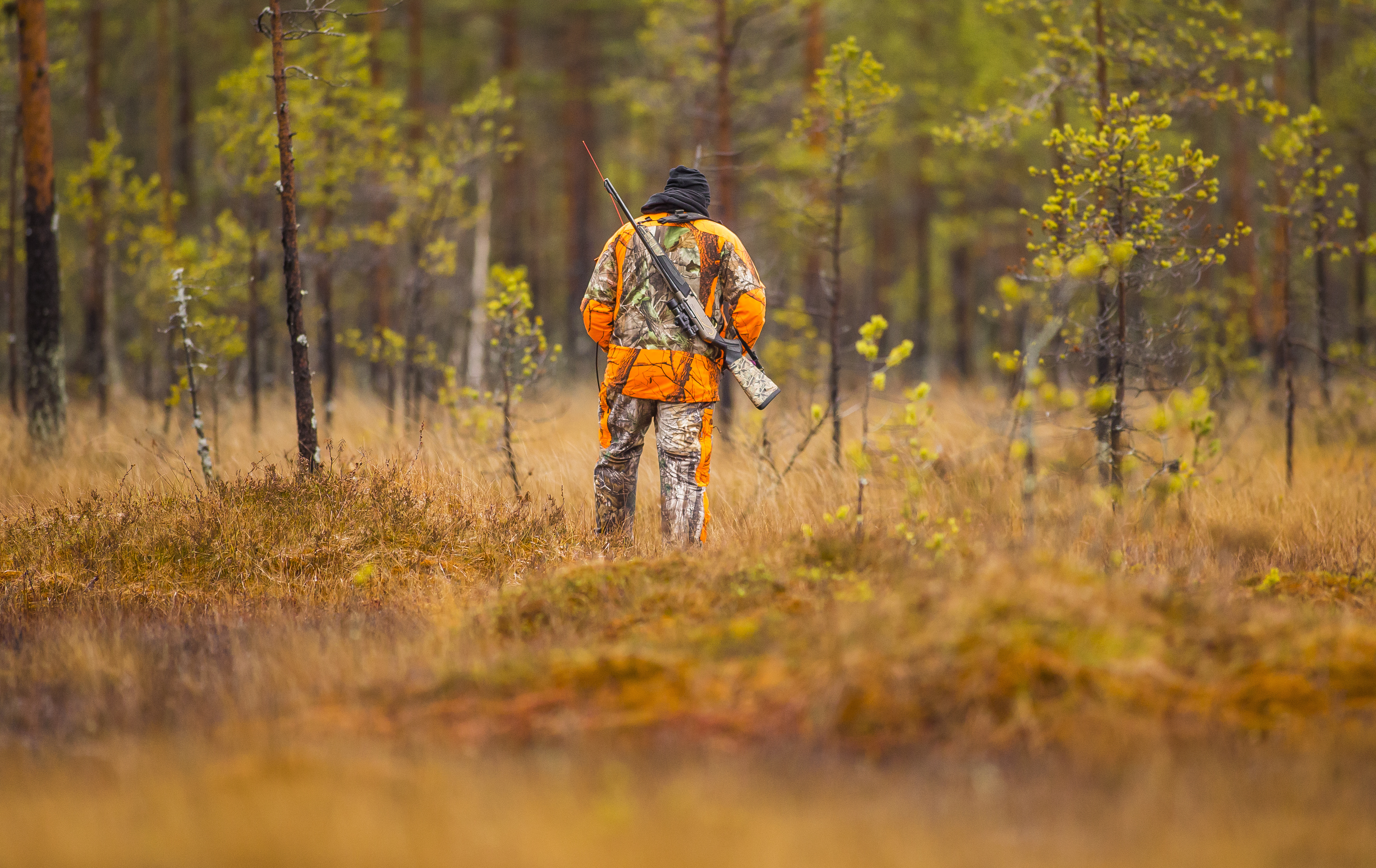
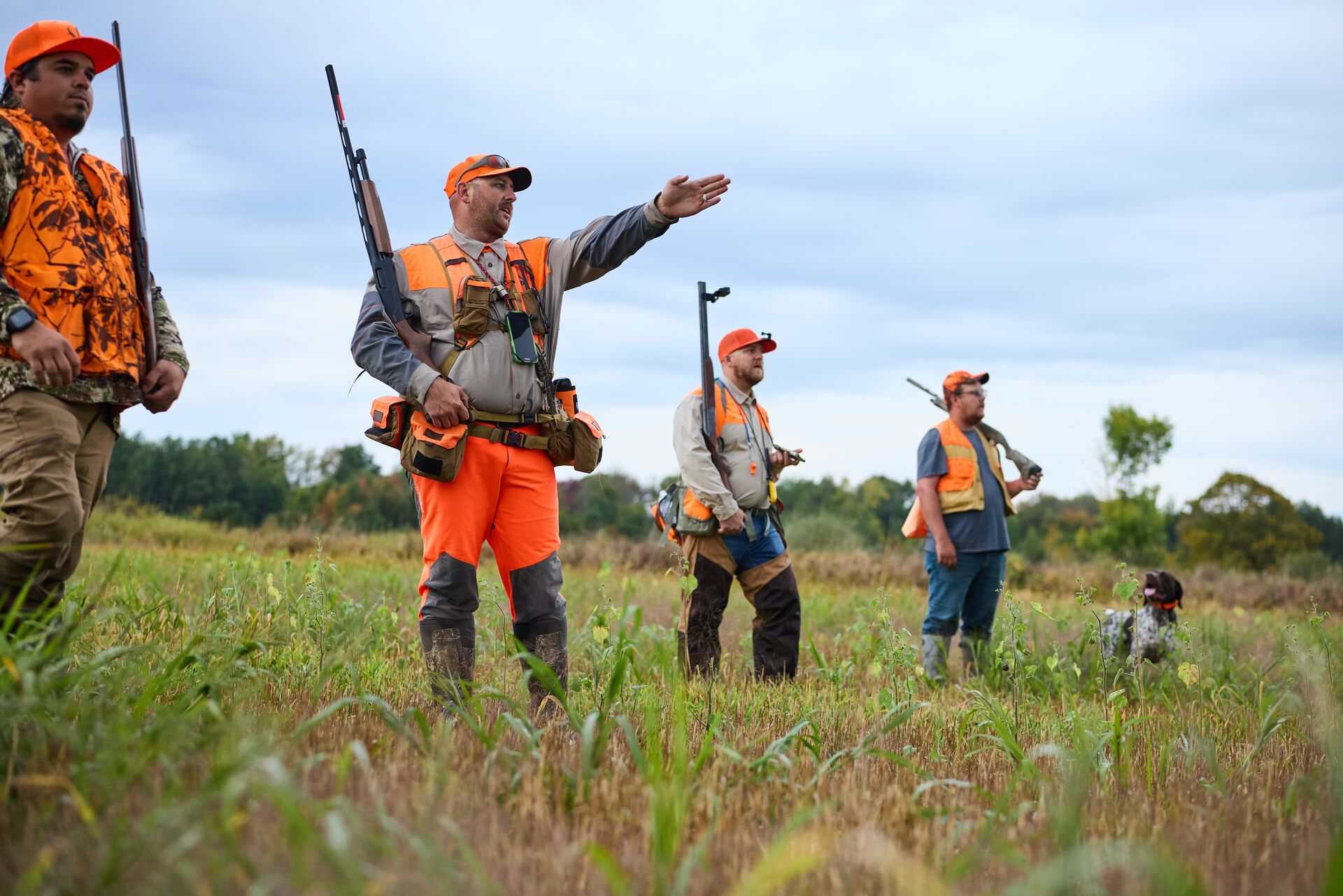
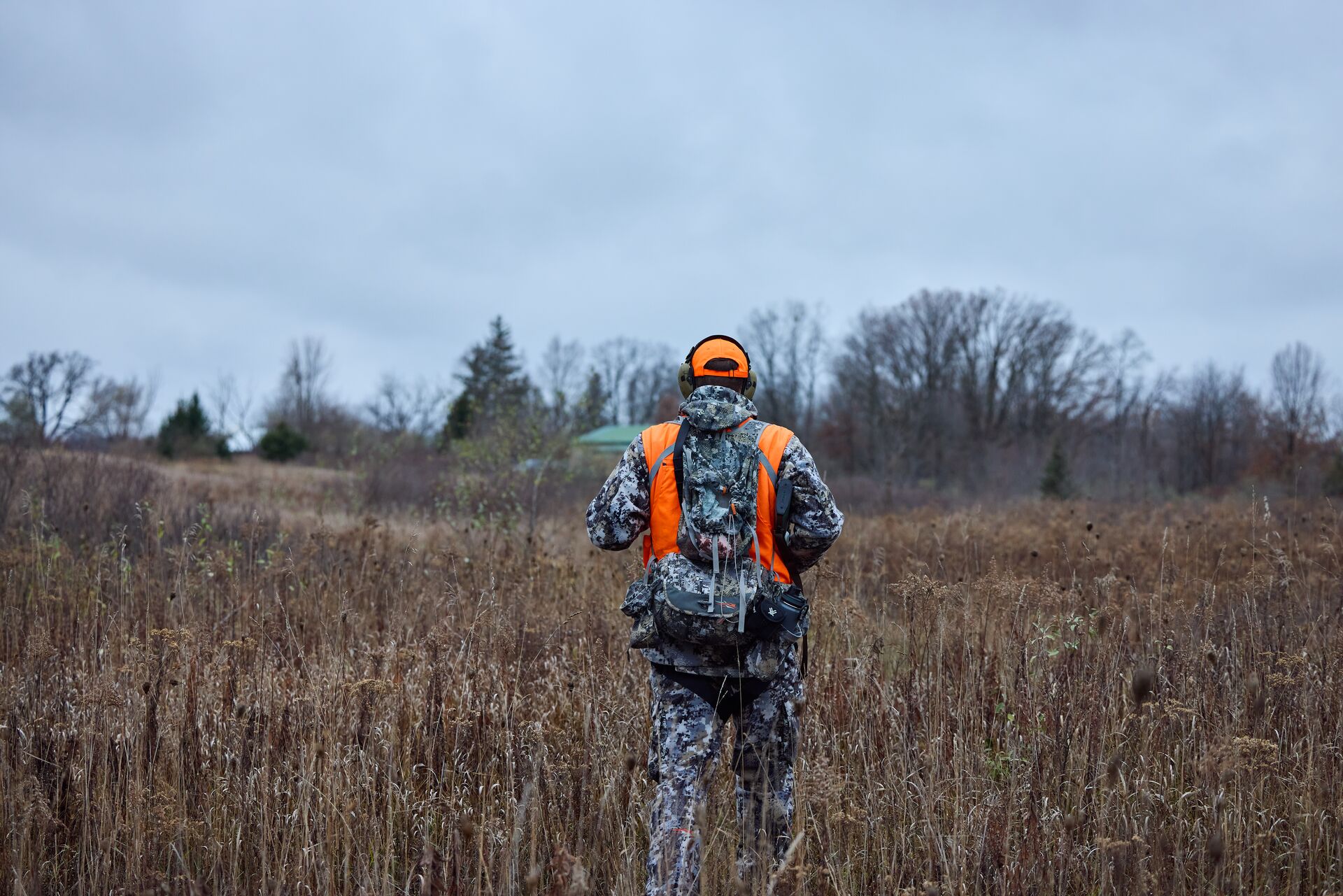
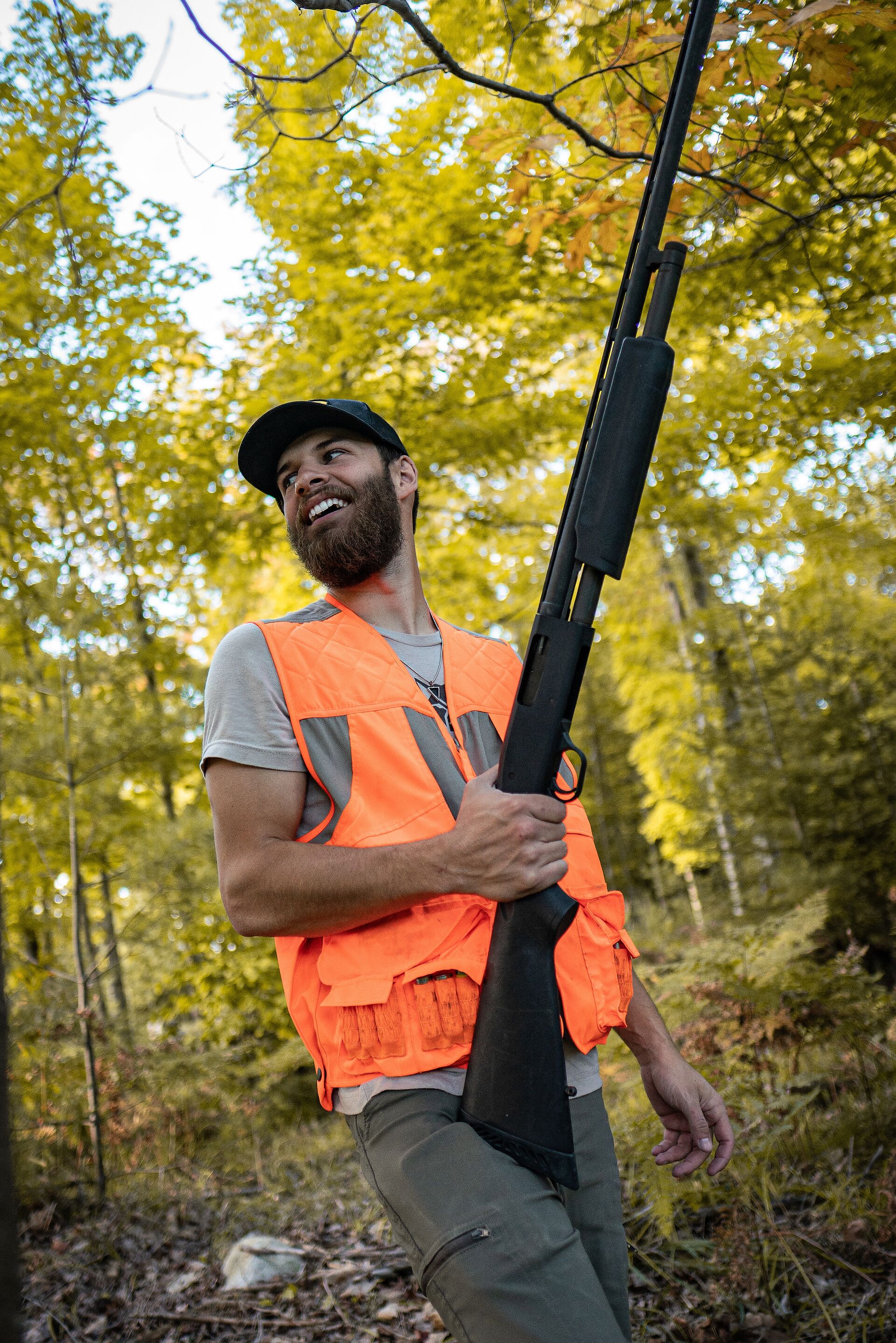
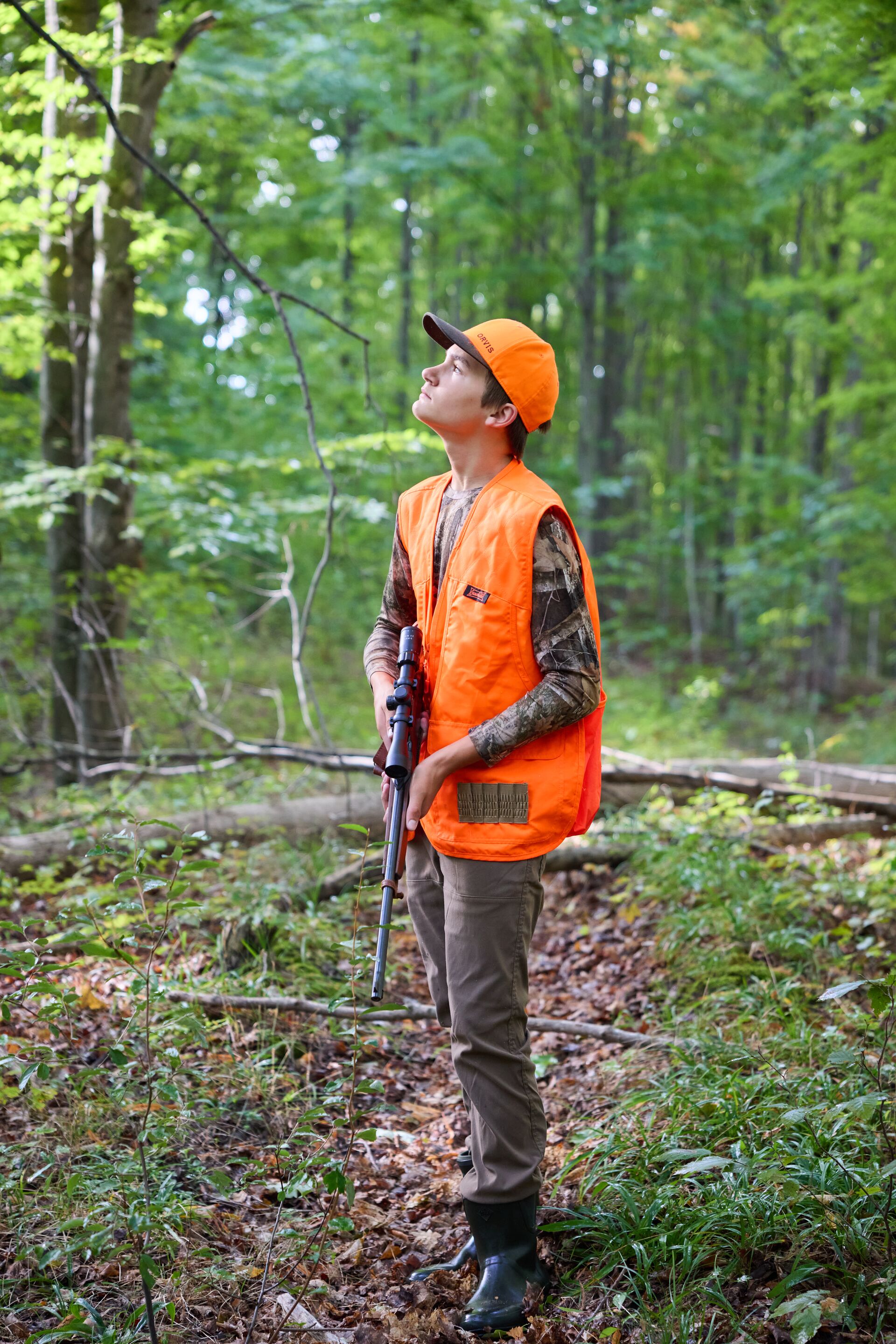
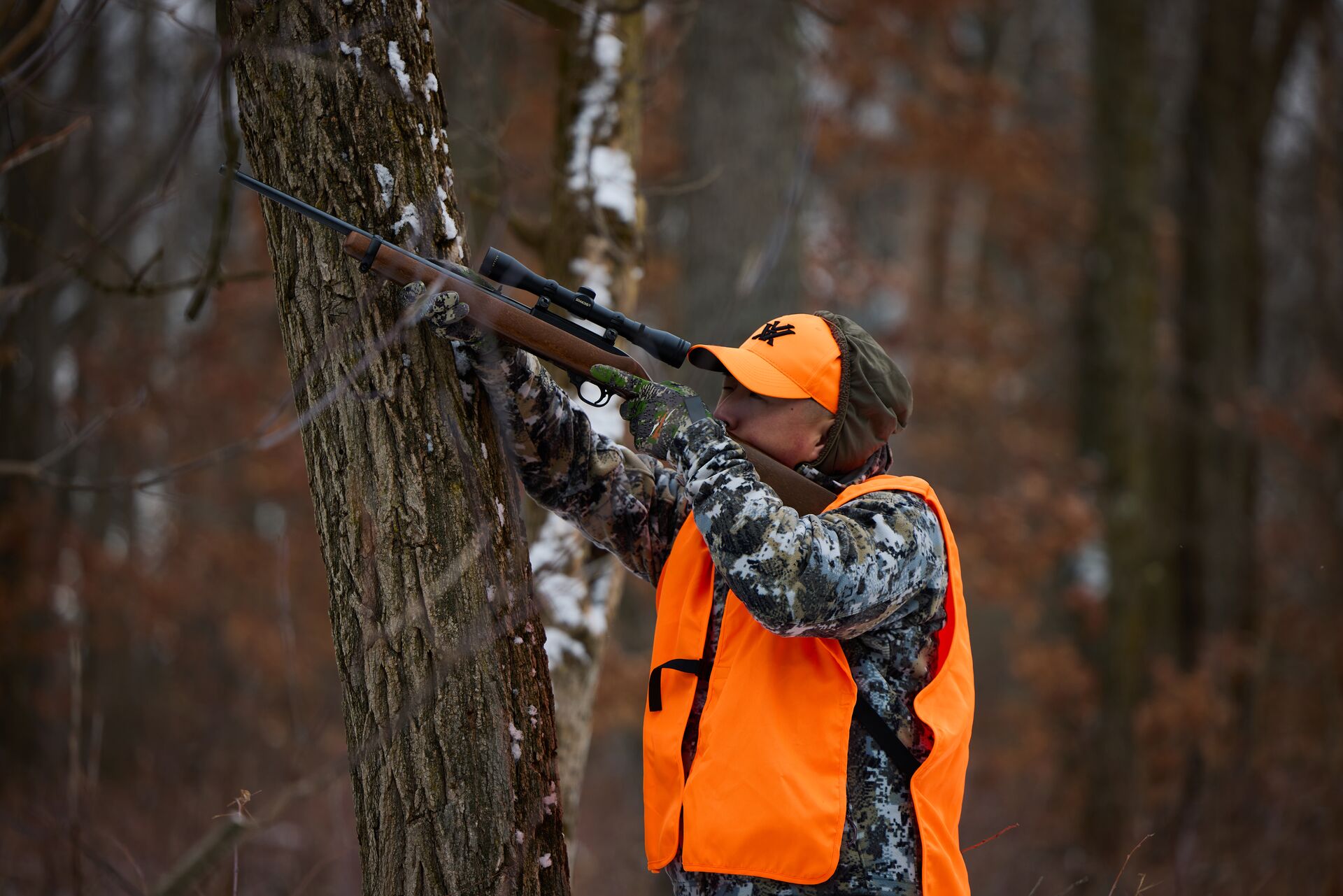
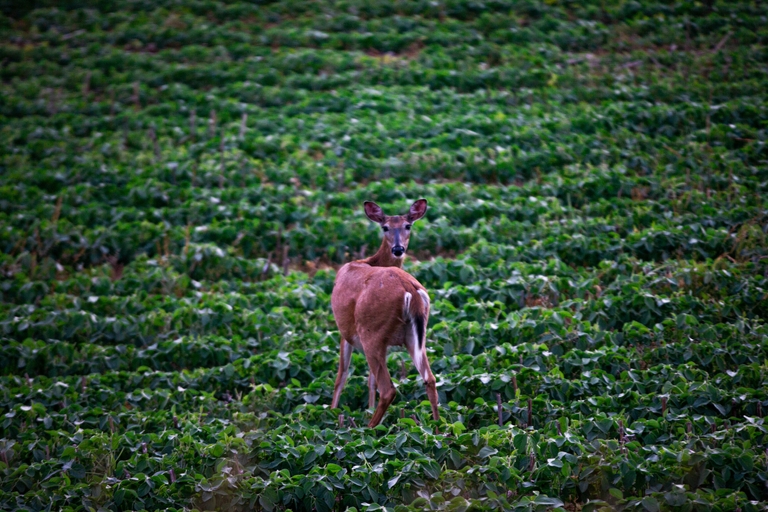
Blaze orange (hunter orange) requirements vary significantly by state. Most states require a minimum amount of solid or camo blaze orange on the head, chest, and/or back during firearm deer season (typically 144–500 square inches), though several states have no blaze orange requirement at all.
Some states require it only for firearm hunters, exempting archery-only hunters. However, other states require it for all hunters, including bowhunters, during any concurrent firearm season.
A few states allow blaze pink as an alternative to blaze orange. Requirements can also vary by hunting method (rifle vs. muzzleloader vs. shotgun) and by specific wildlife management unit. Hunters should always verify their state's exact square-inch requirement, color options, and body-placement rules before the season opens, since fines for non-compliance are common and state legislatures periodically update requirements.
Even when not required, wearing blaze orange is a good idea. While deer can't see it, other hunters can. Wearing it could save your life! Here's what you need to know about the requirements in your state.
Updated October 1, 2026
Do I Need to Wear Blaze Orange In My State?
Again, checking your state's regulations before opening day each season is always smart. However, here's an overview of the requirements for each state.
Blaze Orange Requirements by State
Alabama
When the gun deer season is open, including youth deer season and the special muzzleloader and air rifle deer seasons, anyone hunting any wildlife species is required to wear an outer garment above the waist with a minimum of 144 square inches of hunter orange or pink. Or, you may wear a full-size hunter orange hat or cap.
Additionally, anyone hunting or trapping any wildlife species on Wildlife Management Areas (WMAs) of Alabama must wear a minimum of 144 square inches of hunter orange or a full-sized hunter orange hat.
Hunter orange is not required in Alaska, but it is strongly encouraged.
Arizona
In Arizona, Hunter orange is not required, but we strongly recommend wearing it when hunting with or near others.
Arkansas
During big game firearm seasons (deer, bear, or elk), hunters must wear at least 400 square inches of hunter orange or safety green above the waist, as well as a blaze orange or hunter safety green hat.
At least 144 square inches of blaze orange is also required on each visible side of ground blinds. However, hunters are not required to wear orange when hunting migratory birds or raccoons, opossums, or bobcats at night.
California
Hunters are not required to wear orange when hunting in California. However, (again) we strongly encourage it.
Colorado
During firearm seasons, Colorado hunters of deer, elk, pronghorn, moose, and bear must wear at least 500 square inches of solid daylight fluorescent orange or pink above the waist, including a head covering.
However, bowhunters are not required to wear blaze orange during archery-only seasons.
Connecticut
Anyone hunting from Sept. 1 through the end of February in Connecticut must wear at least 400 square inches (about the size of four sheets of paper) of blaze orange above the waist and visible from all sides. This can include a hat and a vest.
However, archery deer hunters are not required to wear orange during archery-only seasons. Additionally, hunters are not required to wear orange when hunting waterfowl from a boat.
Firearm deer hunters, bowhunters hunting during firearm season, and small game hunters in Delaware must wear at least 400 square inches of blaze orange on the head, chest, and back during firearm season. However, waterfowl hunters do not have to wear orange.
Florida
When hunting on public land, all Florida deer hunters and their hunting partners must wear at least 500 square inches of fluorescent orange above the waist when hunting deer. However, bowhunters are not required to wear blaze orange during archery-only seasons.
These rules do not apply when hunting on private land. Blaze orange is optional (but strongly recommended).
Georgia
Georgia law requires deer, bear, and feral hog hunters and their companions to wear at least 500 square inches of hunter orange or pink above the waist during firearm or primitive weapons deer seasons. This can include orange headwear.
However, orange is not required for archery-only seasons.
Hawaii
All those hunting or accompanying hunters (even if you're not hunting) in hunting areas where firearms are allowed in Hawaii must wear a solid blaze orange shirt, vest, coat, or jacket.
The orange must be visible from the front and back while carrying game or wearing a backpack, and camo orange is now allowed.
Idaho
Blaze orange is generally not required when hunting in Idaho, except when hunting pheasants and where an upland game permit is required. You'll need at least 36 square inches of orange above the waist.
Illinois
Illinois hunters must wear 400 square inches of blaze (orange or pink) and a hat during firearm deer season. Upland game hunters must wear a blaze orange hat. However, camouflage orange or pink does not meet the requirements.
You must also keep wearing your orange when tracking a wounded deer.
Indiana
During deer seasons, woodcock, pheasant, rabbit, and squirrel, hunters and bowhunters must wear a blaze orange jacket, vest, hat, or coveralls. Camouflage patterns do not qualify. Squirrel hunters must wear orange from Nov. 1 through Jan. 31.
Iowa
When hunting upland game birds, you must wear a hat, cap, vest, jacket, sweatshirt, coat, sweater, shirt, or coveralls that is 50% blaze orange. When hunting deer with a firearm, you must wear at least one item (other than a hat) that is blaze orange.
Additionally, when hunting deer while using a blind during shotgun season, you must place at least 144 square inches of blaze orange material on your blind.
Kansas
Big game hunters in Kansas and their companions must wear at least 200 square inches of blaze orange during firearms seasons. 100 inches must be visible from the front and 100 inches must be visible from the back. Hunters must also wear a blaze orange hat.
Kentucky
During modern gun, muzzleloader, and youth gun deer seasons (as well as elk firearm season in the elk zone) all hunters (and anyone accompanying hunters) in Kentucky must wear solid blaze orange as an outer garment on the head, chest, and back. However, waterfowl and turkey hunters are exempt.
Louisiana
During open deer firearm season, Louisiana hunters must wear at least 400 square inches of solid hunter orange on their head, chest, and back.
When hunting on private land, hunters may wear a blaze orange hat instead. The orange requirements don't apply to hunters in deer stands on legally posted private lands or archery hunters. More requirements apply for wildlife management areas and dog seasons for rabbits and squirrels.
Maine
During open deer firearm and muzzleloader seasons,Maine hunters must wear two articles of blaze-orange clothing visible from all sides. These articles must include a solid orange hat plus a jacket, a vest, a coat, or a poncho that is at least 50% orange.
Moose hunters in the moose district must wear one piece of solid blaze-orange clothing. Check out the full details with the Main Department of Inland Fisheries & Wildlife.
Maryland
All Maryland hunters and their companions must wear a solid blaze orange hat or a vest or jacket with at least 250 square inches of blaze orange or pink on the front and back.
During firearm seasons in Massachusetts, all hunters must wear at least 500 square inches of fluorescent orange on the chest, back, and head. Additionally, hunters on WMA land must wear a hunter-orange hat during pheasant and quail season.
Michigan
Michigan hunters must wear as much hunter as possible in the field for any hunter during deer firearm season. This should include orange outer garments, like a hat, jacket, vest, or rain gear. Exemptions include waterfowl, crow, dove, and turkey hunters, and bow deer hunters during the archery season.
Blaze orange should be visible from all sides and must be at least 50 percent orange to meet legal requirements.
Minnesota
During open firearm deer season, hunters and trappers in Minnesota must wear blaze orange or pink on a cap, jacket, vest, shirt, or similar. However, when it's not firearm or muzzleloader season, at least one article of clothing must be hunter orange or pink and worn above the waist to take small game.
Camouflage pink and orange are allowed, but must be at least 50 percent pink or orange. Check the latest state requirements for details and other exceptions.
Mississippi
During firearm season, Mississippi deer or hog hunters must wear at least 500 square inches of hunter orange visible from all sides. The orange must be solid (unbroken). Exemptions include hunters in a stand 12 feet or higher or a fully enclosed blind, but they must wear it while traveling to and from the stand.
Missouri
Missouri law requires the hunter orange color to be plainly visible from all directions during firearms deer hunting seasons. The most important clothing choices are a hunter orange hat and hunter orange outerwear (i.e., a shirt, vest, or jacket).
Montana law requires that all big game hunters and anyone accompanying a hunter must have at least 400 square inches of hunter-orange material above the waist visible at all times. A blaze orange hat or cap alone does not meet state requirements.
Exceptions include archers during the special archery season and wolf hunters outside the general deer and elk season.
Nebraska
All big game hunters and bowhunters in Nebraska must wear at least 400 square inches of blaze orange on the head, back, and chest during firearm deer, fall turkey, antelope, elk, and mountain sheep seasons.
Nevada
Blaze orange is not required when hunting in Nevada, but we recommend wearing it. Throw on a hat or a vest to make yourself more visible to other hunters.
New Hampshire
New Hampshire doesn't require hunters to wear blaze orange, but officials strongly recommend wearing it. Wear a cap or vest to help other hunters see you in the field.
New Jersey
All deer, game bird, and small mammal hunters using firearms in New Jersey must wear a blaze orange hat or another item with at least 200 square inches of blaze orange visible from all sides. Deer hunters using ground blinds must also display 200 square inches on or within 5 feet of the blind. A camouflage orange hat does not meet the requirements.
Exceptions apply to hunters of waterfowl and wild turkeys as well as bowhunters. So, be sure to check the latest state regulations when preparing for your hunt.
New Mexico
Hunters on White Sands Missile Range must wear at least 244 square inches of blaze orange. Likewise, hunters on Fort Bliss or McGregor military reservations must wear a blaze orange hat and vest.
However, when hunting anywhere else where it's legal to hunt within New Mexico, hunter orange is not required, but is strongly recommended for a safe hunt.
New York
Anyone hunting deer or bear with a firearm or accompanying someone hunting these animals with a firearm must wear a solid or patterned fluorescent orange or fluorescent pink hat, vest, or jacket. The state requires a minimum of 250 square inches of patterned or solid fluorescent pink or orange.
North Carolina
North Carolina hunters after prey other than fox, bobcat, raccoon, and opossum, upland game birds other than turkey, and feral swine, when hunting with firearms must wear a fluorescent orange hat or outer garment visible from all sides. However, blaze orange isn't required for landowners or their spouses and children when hunting on their own property.
North Dakota
Big game hunters and those hunting during firearm seasons in North Dakota must wear at least 400 square inches of blaze orange with a hat and garment above the waist. A camouflage garment does not meet this requirement.
Ohio
When hunting any legal species during deer firearm seasons, hunters must wear a blaze orange vest, coat, jacket, or overalls when hunting from 30 minutes before sunrise until sundown. This applies to hunting on public and private land.
However, waterfowl hunters are exempt from these requirements.
Oklahoma
Oklahoma deer, elk, or antelope hunters who use firearms must wear at least 400 square inches of blaze orange as an outer garment above the waist and a hat. During open firearm deer, antelope, bear, or elk season, archers must also follow these requirements.
During any firearms season, archery hunters must wear a blaze orange head covering or outer garment above the waist. Camouflage orange garments are legal if they have 400 square inches of hunter orange.
In Oregon, hunters ages 17 and younger must wear fluorescent orange visible from all directions as a shirt, jacket, coat, vest, sweater, or head covering when hunting game mammals or upland birds with a firearm.
Pennsylvania
During Pennsylvania's regular firearm deer season, hunters must wear at least 250 square inches of hunter orange on their heads, chests, and backs. Additionally, hunters must display a minimum of 100 square inches of hunter orange within 15 feet of a blind or enclosed tree stand.
All hunters (and the general public using hunting lands during hunting season) in Rhode Island must wear at least 200-500 square inches (a tiered system) of fluorescent orange above the waist and visible from all sides. Small game hunters, fall turkey hunters while traveling, and muzzleloader deer hunters need 200 square inches (a hat).
Shotgun deer season requires 500 (hat and vest). This can be a combination of a hat and vest, equaling 500 square inches of solid hunter orange.
South Carolina
When hunting deer, bear, and hogs on WMA (wildlife management areas) land in South Carolina, hunters must wear a hat, coat, or vest of solid international (or "blaze") orange when hunting during any gun and muzzleloader season. This includes small game hunters, and exempts archery-only deer seasons plus dove, turkey, waterfowl, and migratory bird hunters.
Exemptions apply for dove, turkey, waterfowl, and migratory bird hunters.
South Dakota
All big game firearm hunters (excluding turkey and mountain lion) in South Dakota must wear at least one hunter-orange garment above the waist. Acceptable items include hat, cap, shirt, jacket, vest, coverall, or poncho worn above the waist.
Camouflage garments do not count toward the requirement.
Tennessee
Tennessee big game hunters must wear at least 500 square inches of blaze orange or pink on their head or upper portion of their body, visible from front and back. This can include camouflage orange garments containing 500 square inches of orange.
Bowhunters in areas where a gun season overlaps (bear, for example) must also comply.
Texas
On any public hunting lands, including National Forests and grasslands in Texas, hunters and their companions must wear at least 400 square inches of blaze orange. At least 144 square inches of blaze orange must be on the chest and back. Hunters must wear an orange hat.
Exceptions apply to turkey, migratory birds, desert bighorn sheep, and alligator hunters.
Utah
Utah requires anyone hunting big game in Utah to wear a vest, jacket, sweater, or hat made primarily of hunter orange material. Some exceptions apply based on the type of hunt.
Vermont
Blaze orange is not required in Vermont, but it could save your life. We highly recommend wearing it during your hunt.
Virginia
During firearm deer season, Virginia hunters (and anyone accompanying them during a hunt) must wear hunter orange or pink on the upper body or a hunter orange hat visible from all sides.
Alternatively, hunters may display 100 square inches of hunter orange within body reach, at or above shoulder level, and visible from all sides.
Washington
Washington requires a minimum of 400 square inches of blaze or "hunter" orange or pink worn above the waist and visible from all sides. A hat alone does not meet this requirement.
Firearm hunters and those hunting deer or elk during firearm seasons must use hunter orange. However, when hunting upland game or using a bow, hunter orange or pink is not a requirement.
During deer gun season, all West Virginia deer hunters must wear an outer garment with at least 400 square inches of blaze orange when hunting public land or on land owned by someone else.
Wisconsin
During firearm deer season in Wisconsin, hunters must wear at least 50% hunter orange or pink as outer garments above the waist, including head coverings. However, waterfowl hunters and night raccoon hunters are exempt from this rule.
Wyoming
Wyoming big game hunters must wear at least one fluorescent orange piece, such as a vest, jacket, or coat. Only licensed archery hunters are exempt at certain times of year.
Small game and bird hunters must wear blaze orange when pheasant hunting in a WMA or on lands bordering Glendo State Park. Additionally, the state recommends that all hunters wear blaze orange or pink when hunting.
What to Consider about Blaze Orange Laws
Blaze orange requirements are a critical safety component of hunting regulations, and every hunter has a responsibility to understand and follow them. While the general principle is simple (be visible to other hunters), the specific blaze orange laws can vary more than many people realize.
Here's what to consider before heading out for a hunt.
Always Verify Local Laws
As you can see in the chart above, blaze orange requirements differ by state and sometimes even by region within a state. State hunting regulations can also change depending on the season or the species being hunted.
Before heading into the field, review the current year’s hunting digest or wildlife agency website to ensure you’re compliant.
Hunting Method Matters
Blaze orange rules can also depend on how you are hunting.
Firearm seasons typically have stricter visibility requirements than archery seasons due to increased range and risk. During rifle or muzzleloader seasons, hunters are commonly required to wear a specified amount of solid blaze orange on the head, chest, and/or back.
Archery-only seasons may have reduced or no blaze orange requirements, unless they overlap with a firearm season.
Know the Exceptions
Some exemptions apply in certain situations, depending on the state's regulations and what you plan to hunt.
Waterfowl and turkey hunters are often excluded from blaze orange requirements because concealment is essential for those species. Hunters inside fully enclosed blinds or vehicles may also be exempt in some jurisdictions.
Remember: these exceptions are not universal. Always confirm the rules where you are hunting.
Solid Color Only
Most states require solid blaze orange, not camouflage patterns that incorporate orange. Even if the camo includes orange panels, it may not meet legal standards unless specifically labeled as compliant.
When in doubt, choose garments clearly identified as solid blaze orange.
Wearing blaze orange isn’t just about compliance; it’s about safety. High visibility significantly reduces the risk of mistaken-identity incidents and helps ensure a safe hunting experience for everyone in the field.
What About Other Colors (or No Color Requirements)?
Some states now accept blaze pink along with (or in place of) blaze orange, giving hunters more options to stand out during a hunt. Other states allow hunting without any hunter orange or pink requirements.
States With No Blaze Orange Requirement
In the following states, no statewide law requires hunters to wear orange.
Alaska
Arizona
California
Nevada
New Hampshire
Vermont
Wearing orange is still a smart safety choice in these states, even though the law does not require it.
States That Allow Blaze Pink as an Alternative
Blaze pink is a legal alternative to orange in a growing number of states. Research suggests pink is highly visible to people, and many hunters find it an appealing option.
These states currently accept fluorescent pink in place of, or alongside, blaze orange:
Alabama
Colorado
Georgia
Louisiana
Maryland
Minnesota
New York
Tennessee
Virginia
Washington
Wisconsin
Wyoming
The rules for pink vary by state.Some states accept pink only for certain seasons or garments, and others require a minimum amount of solid color or set a camo percentage. Pink laws are also changing quickly, and more states may add it.
Before you buy pink gear, check your state wildlife agency's current regulations to confirm it meets the requirement for your season.
How to Confirm Your State's Blaze Orange (or Pink) Requirement
Blaze orange rules differ from state to state, and they can change from one season to the next. Some states set a minimum number of square inches, while others only name the type of clothing you must wear. Follow these steps before opening day to make sure you meet your state's requirement.
Identify your hunting method and season. Requirements often depend on whether you hunt with a firearm, muzzleloader, or bow, and on which species you pursue. Many states require orange during firearm deer season but exempt turkey and waterfowl hunters.
Read your state wildlife agency's regulations.Find the hunter orange section of the current hunting digest or agency website. Look for the minimum amount required. Some states list square inches, and others name specific garments, such as a hat and a vest.
Confirm where you must wear it. Some states specify the head, chest, and back. Others require a hat, a garment above the waist, or both. Also check whether the orange must be visible from all sides.
Check whether blaze pink is allowed.A growing number of states accept fluorescent pink as an alternative to orange. Confirm your state's rule before you buy pink gear.
Check the camouflage rule. Some states accept camo orange if it meets a minimum percentage of orange, and others require solid orange only.
Find out whether bowhunters must wear orange during an overlapping firearm season. Many states exempt archery-only seasons, but that exemption often ends when a firearm or muzzleloader season opens in the same area.
Inspect your gear before the season opens. Check that your garments are in good condition, since faded orange may not meet the standard. Fines can apply if you hunt without the required orange.
Taking a few minutes to check these details before the season helps you stay legal and visible to other hunters. Always confirm the current rules with your state wildlife agency, because requirements can change from year to year.
Wear Blaze Orange and Take the Hunter Safety Course for Your State
Remember: hunter orange or pink requirements can change for your state between hunting seasons. Always check the latest recommendations or requirements so you can gear up properly before your next hunt!
Hunter-Ed makes it easy to get your hunter education certification! Our online covers state-required safety essentials to protect yourself and others when in the field.
Content most recently reviewed and updated October 1, 2026.
Frequently Asked Questions (FAQs)
We have answers to your questions about blaze orange laws!
Q: Do I have to wear blaze orange on my own property?
A: Usually, yes. Most states apply blaze orange rules on private land as well as public land. A few states exempt landowners in limited cases, including North Carolina, Tennessee, and West Virginia, so confirm your state's exemption details before you skip the orange.
Q: What states require blaze orange?
A: Most states require blaze orange during at least some hunting seasons, usually firearm deer season. For example, Pennsylvania, Michigan, and New York all require it for firearm deer hunters. The amount, the weapon, and the species covered vary by state, so check your state's current regulations.
Q: Can squirrels see blaze orange?
A: Squirrels can see blaze orange, but it does not look bright to them. Squirrels have limited color vision, so orange appears as a muted shade instead of the vivid color people see. Movement, sound, and scent are far more likely to alert a squirrel to your presence.
Q: Can a coyote see blaze orange?
A: Coyotes cannot see blaze orange vividly. Like deer, they have limited color vision, so orange appears as a muted color to them. Movement and contrast can still give you away, so stay still and use the terrain for cover.
Q: What is the hardest color for deer to see?
A: Red and orange are the hardest colors for deer to see. Deer have limited color vision, so those colors blend into the background instead of standing out. Deer see blue much better, so avoid wearing blue clothing, such as jeans, in the field.
Q: How much blaze orange do you need to wear while hunting?
A: It depends on your state. Many states require 400 to 500 square inches worn above the waist, while others require as little as 36 square inches or simply name a garment, such as a hat and a vest. Check your state wildlife agency's regulations for the exact amount, where to wear it, and whether camouflage orange counts.
Q: Do all states require blaze orange?
A: No. Alaska, Arizona, California, Nevada, New Hampshire, and Vermont have no statewide blaze orange requirement. Most other states require it during firearm seasons, and a few require it only in narrow cases, such as certain public areas or younger hunters. Even where the law does not require it, wildlife agencies encourage hunters to wear it.
Q: Is blaze pink an acceptable substitute for blaze orange?
A: In some states, yes. Alabama, Colorado, Georgia, Louisiana, Maryland, Minnesota, New York, Tennessee, Virginia, Washington, Wisconsin, and Wyoming currently accept blaze pink. Rules vary by state, and the list is growing, so confirm your state allows pink before you buy gear.
Q: Do bowhunters have to wear blaze orange?
A: Many states exempt archery-only seasons, but the exemption often ends when a firearm or muzzleloader season overlaps. In states such as Michigan, Kansas, Nebraska, and Washington, bowhunters must wear blaze orange during overlapping firearm seasons. Check your state's rules for your specific season and area.