How to Setup Duck Decoys: A Beginner's Guide
Do you want to start hunting ducks? As a fledgling duck hunter, one of the first skills you'll need to master is how to setup duck decoys.
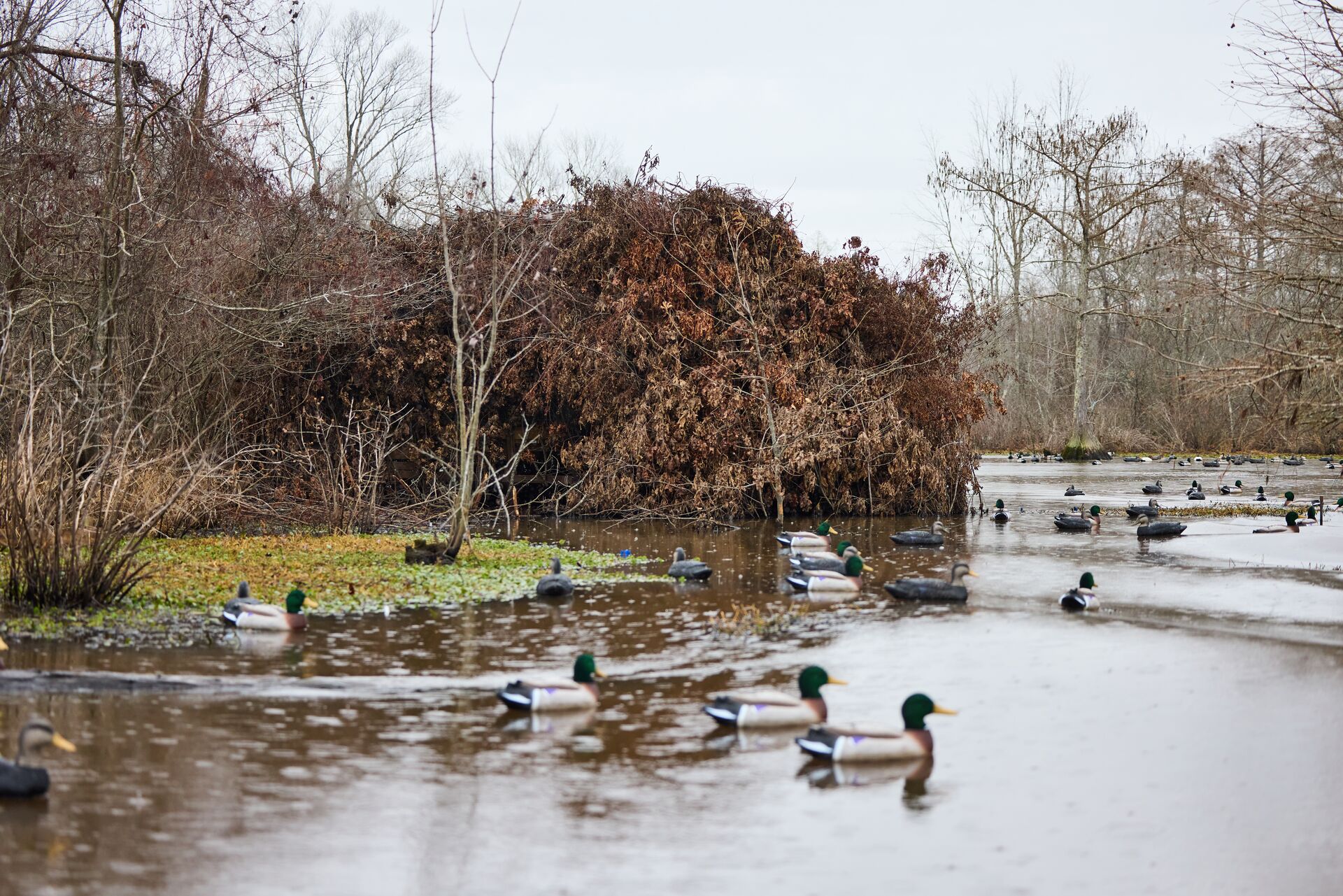
The main way to convince birds to land is a properly placed duck decoy spread. A sloppy setup, on the other hand, might send them flaring away before you ever raise your shotgun.
It's a lot to unpack, but we'll walk through what decoy spreads are, why placement matters, and practical variations new duck hunters can use in different situations.
What is a Duck Decoy Spread?
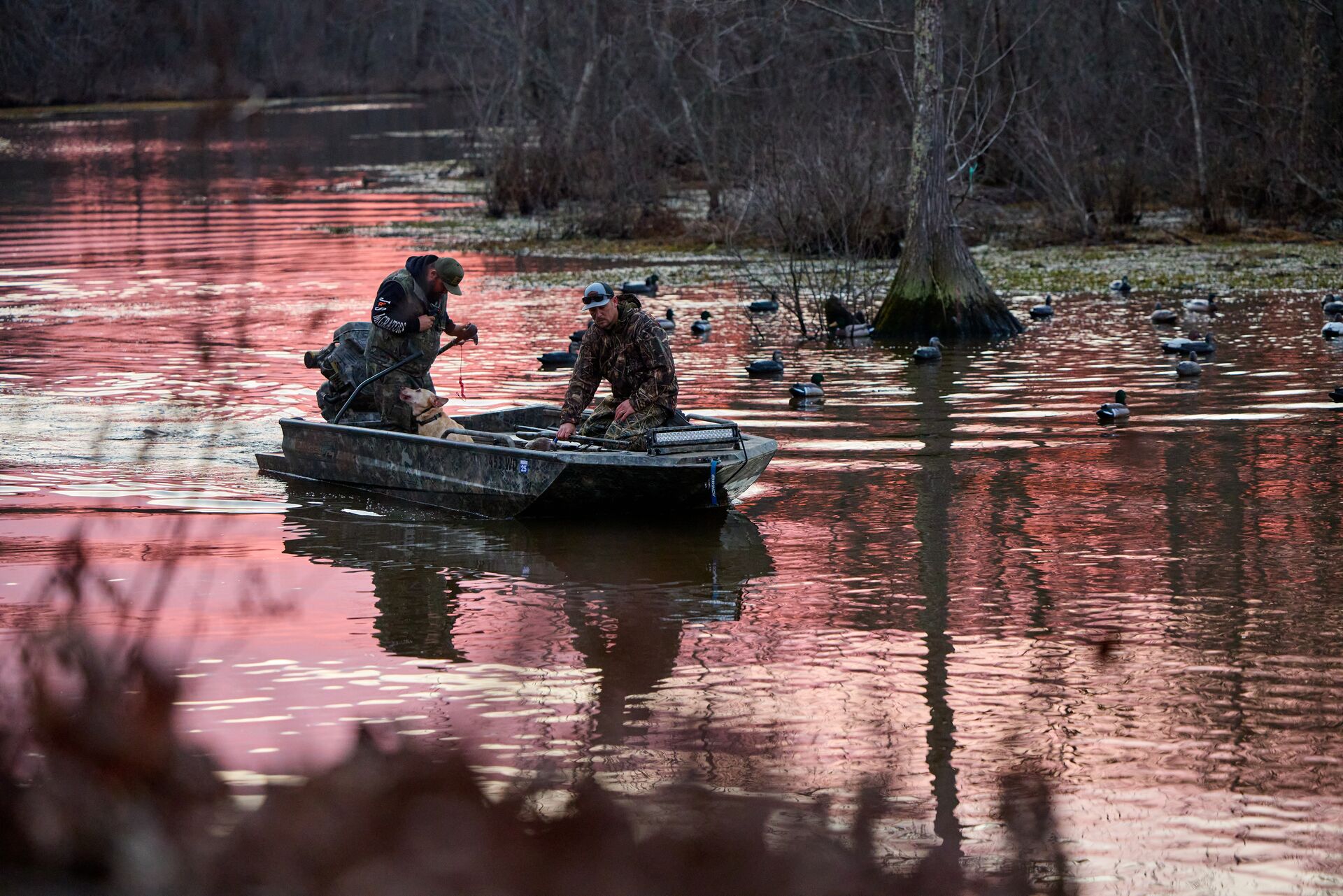
A duck decoy spread is a pattern of floating decoys arranged on the water to simulate the movement of live ducks. Spreads attract birds into range by signaling safety, feeding activity, and natural behavior.
You should align your spread with the season, the type of ducks you're hunting, and the water or marsh conditions that day. Beginners often start with smaller, simpler setups and expand their approach as they learn more about hunting ducks.
Does the Decoy Spread Matter?
Ducks have an uncanny ability to notice when something looks unnatural. A poorly spaced or unrealistic spread can cause them to swing wide or pass you altogether.
A realistic arrangement helps guide birds into open water pockets directly in front of your blind. Factors such as wind direction, current, and time of year all play a role in how you should build your spread, and finding the right honey hole for ducks is the trickiest part of waterfowl hunting.
How Far Should I Set a Duck Decoy From the Blind?
Most hunters position their closest decoys about 15 yards away, with the farthest ones at a distance of 30–35 yards for a realistic spread. This arrangement creates a natural landing pocket and keeps ducks within shooting range (it also makes for easier retrieval).
Always leave an open space directly in front of your blind, as ducks prefer to land in open water. When first learning how to setup duck decoys, be especially mindful not to place decoys too close together. Unnatural spacing is the main reason incoming birds flare away.
How to Setup Duck Decoys
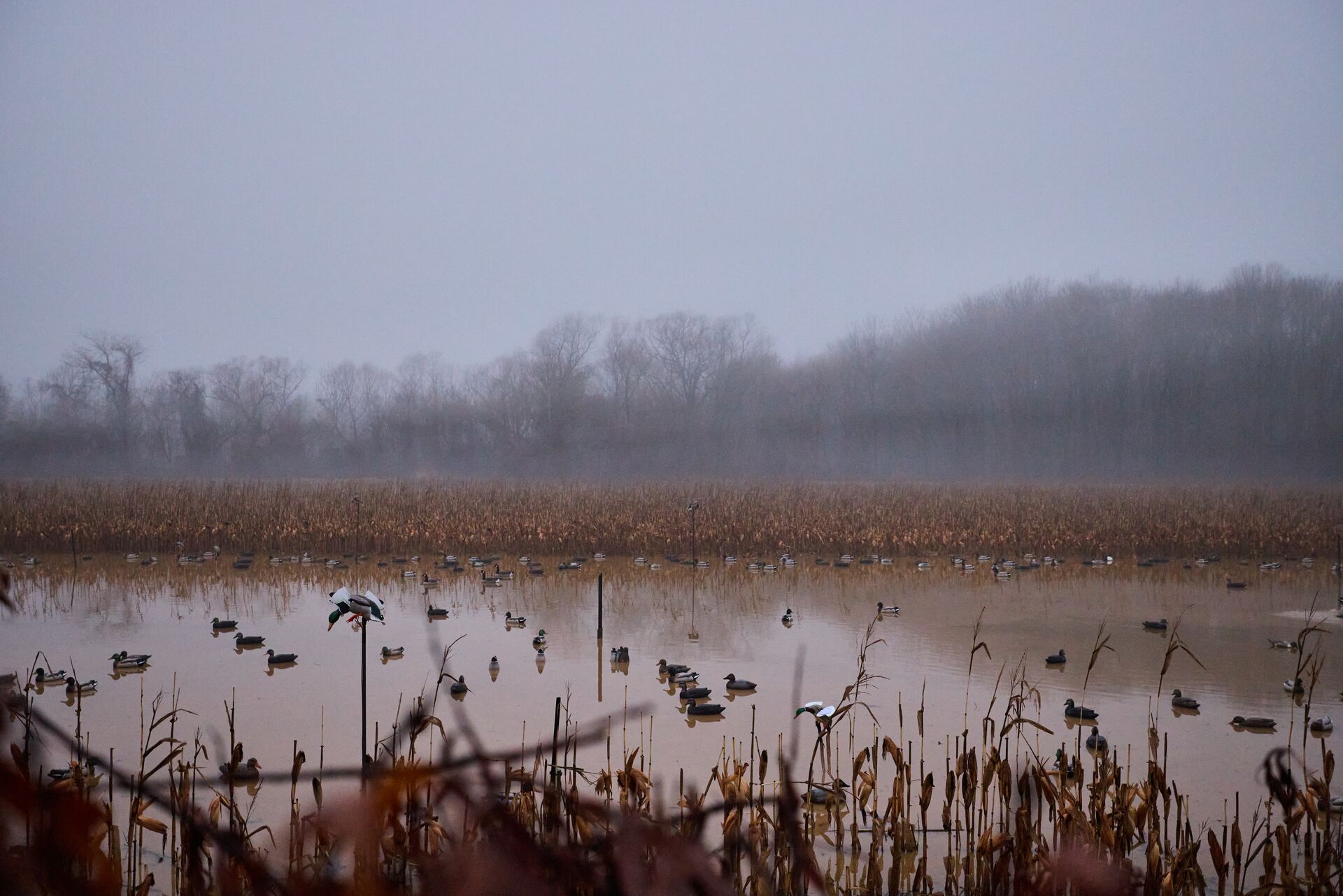
There's no one-size-fits-all spread: the setup depends on the type of water, weather, season, and even the behavior of local flocks. Here are several common spread styles that beginners can use effectively.
Early Season Duck Decoy Spreads
In the early season, ducks are almost always in smaller groups that haven't faced much hunting pressure yet. It may seem counterintuitive, but early season duck decoy spreads must closely reflect the ducks' natural behavior, so plan accordingly:
- Use fewer decoys, as flocks are typically small this time of year.
- Place decoys in family groups of 3–6 birds.
- Add variety by mixing teal, wood ducks, and mallards.
- Maintain loose spacing to replicate ducks' relaxed feeding behaviors.
By simplifying your setup, you create a scene that matches what early-season ducks are actually seeing on the water.
Duck Decoy Spreads for Marsh Settings
Hunting in marshes requires some adjustments, since the water is often shallow in these environments and vegetation can be thick.
- Use lightweight, portable decoys that are easy to carry.
- Group decoys in small clusters and leave pockets of open water.
- Break up the glare of calm water with motion decoys, such as spinners or splashers.
- Match decoys to species that commonly use the marsh, such as gadwall, wood ducks, teal, and pintails.
Duck decoy spreads for marsh ducks are most effective when they mimic how ducks naturally use marsh habitats for resting and feeding.
Duck Decoy Spreads Diagram
Visualizing spreads makes it easier to understand how ducks approach them. Here are a few simple patterns many beginners rely on:
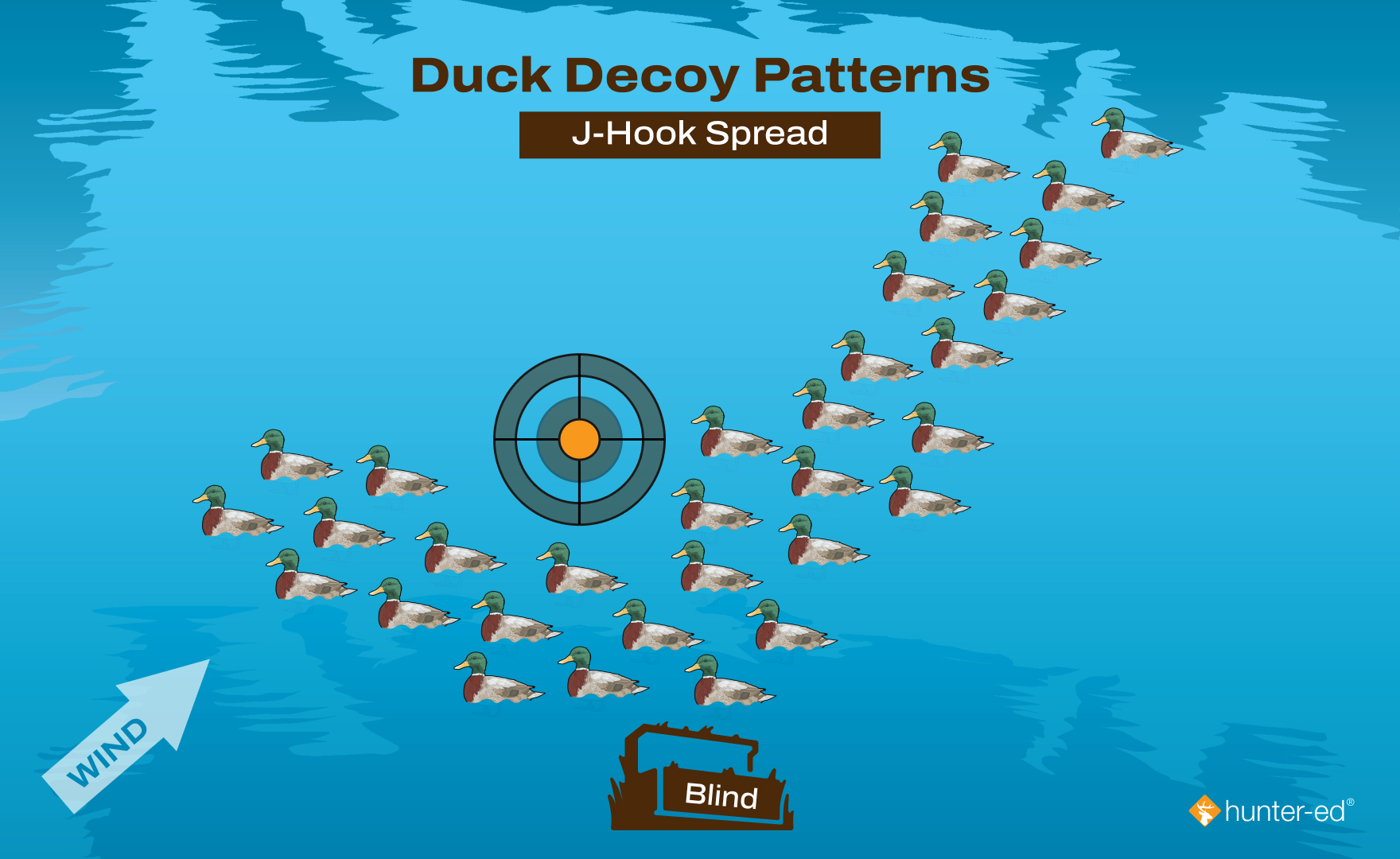
J-Hook Spread
Decoys appear in a J-shape, with the open landing area at the hook.
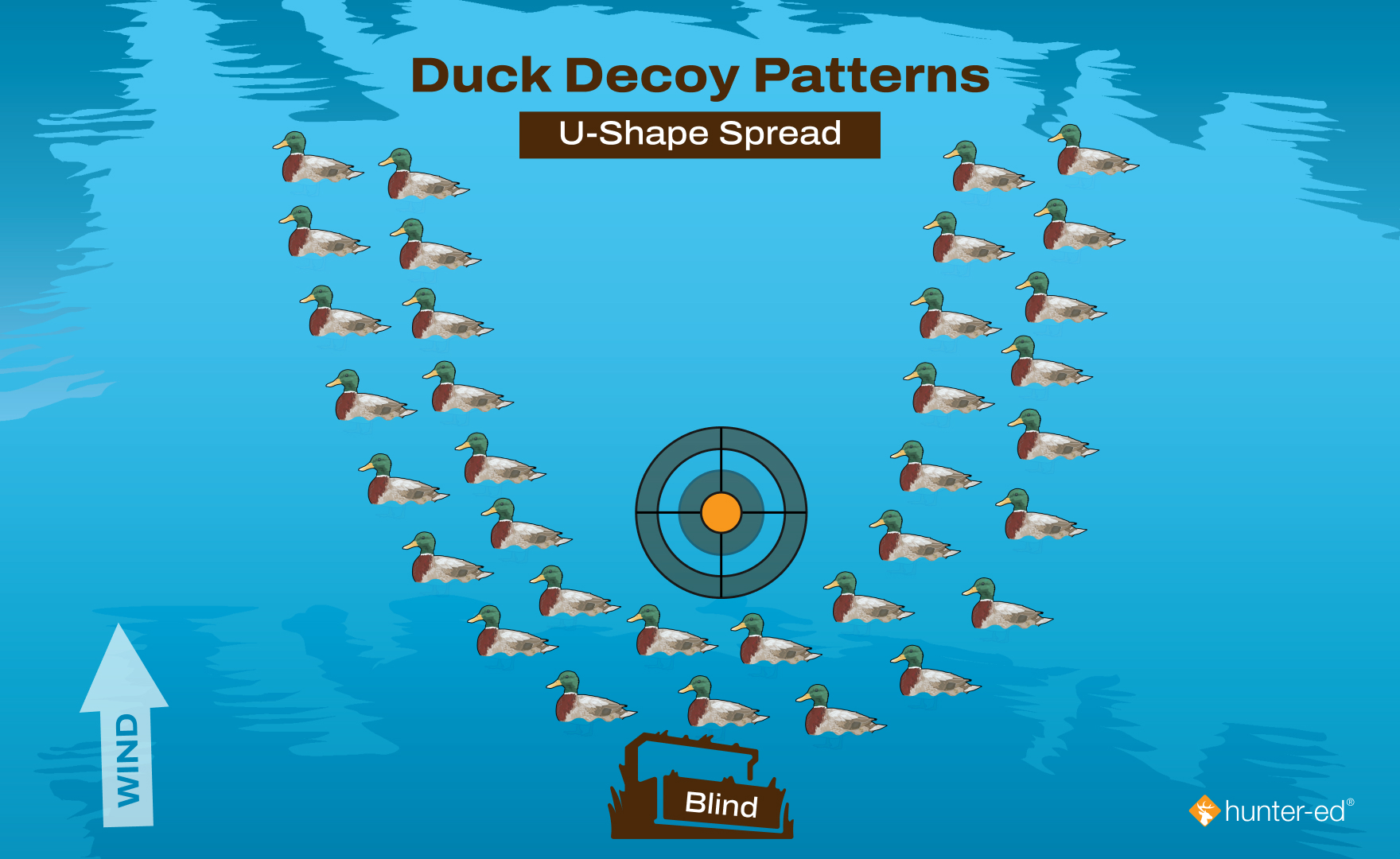
U-Shape Spread
Decoys form a U, leaving a pocket in front of the blind for birds to land.
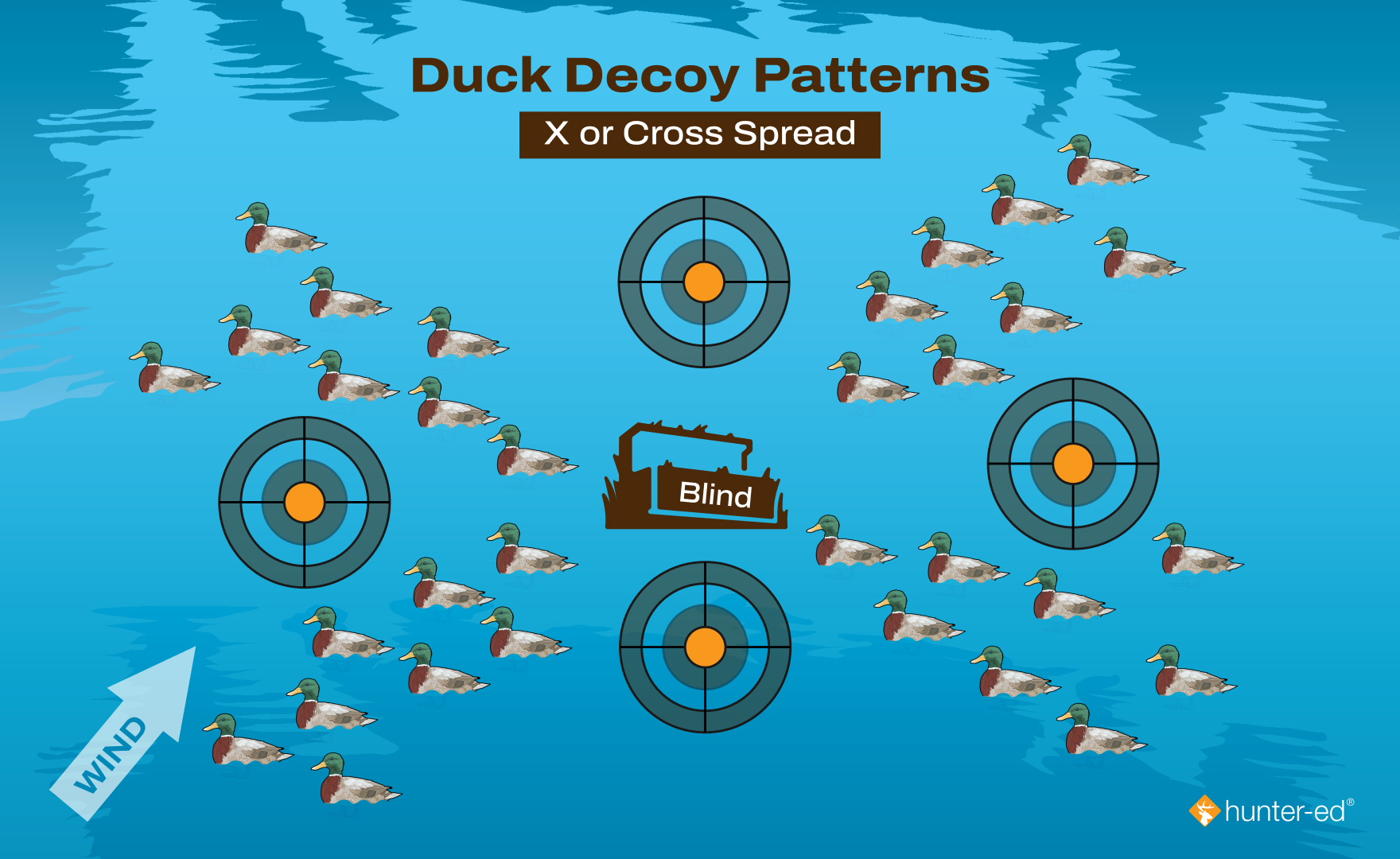
X or Cross Spread
This arrangement works well in open water with shifting winds, providing multiple approach lanes.
Family Pods
Creating small, scattered groups gives an impression of realism and comfort.
Examine a duck decoy spreads diagram before your hunt and practice different setups to recognize how each influences incoming birds.
Duck Decoy Spreads for Rivers
River hunting introduces current, which requires heavier gear and a different approach. Ducks prefer calm areas where they can rest, so set up near those environments.
- Position decoys along current seams, slack water, or eddies.
- Keep spreads tighter to prevent decoys from drifting apart.
- Use heavier anchors or Texas rigs to hold decoys in place.
- Consider long lines to simulate rafting ducks in moving water.
Make the spread fit the river. Duck decoy spreads for rivers only work when passing ducks see your spread as realistic and safe.
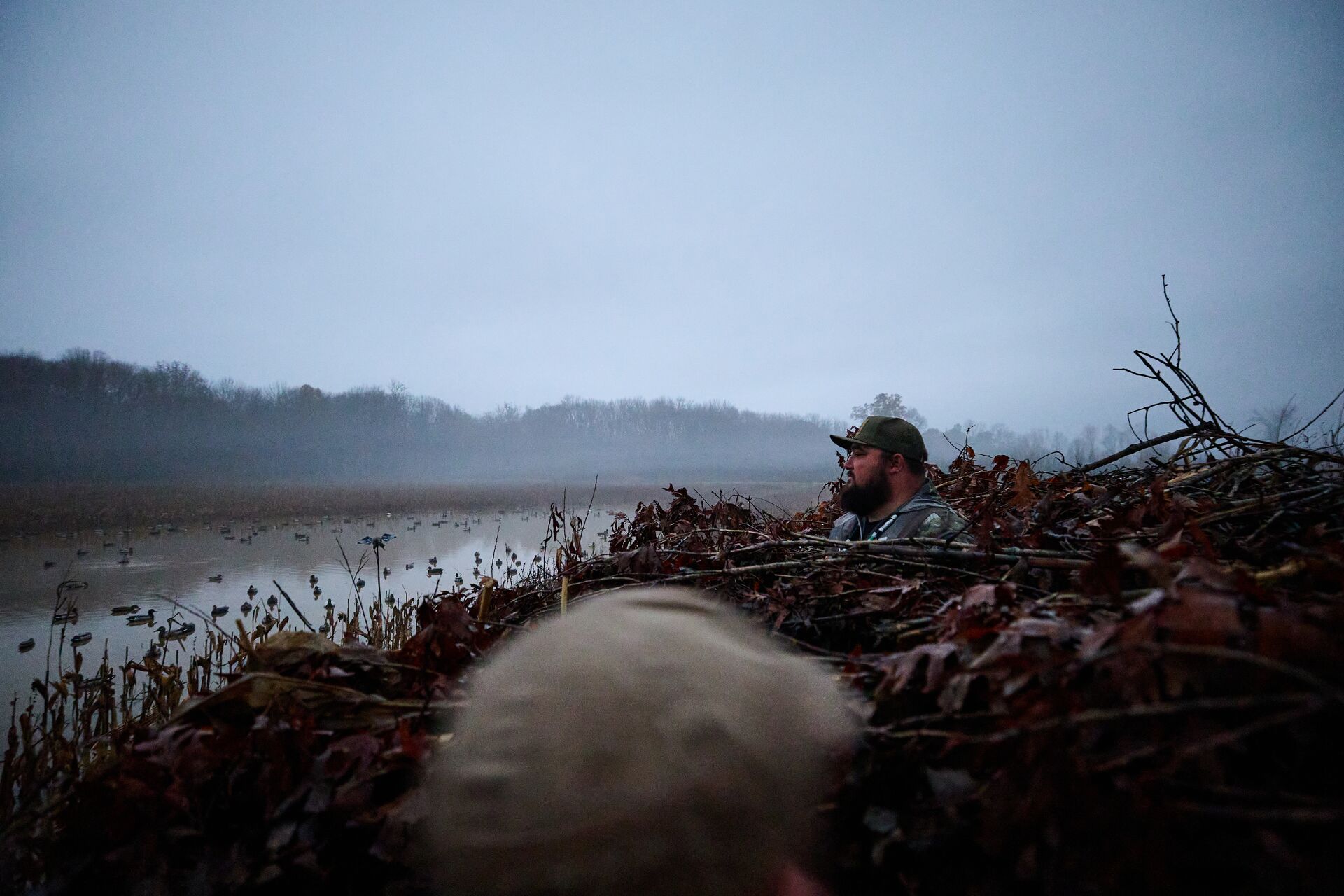
Learn How to Have a Safe Duck Hunt This Season
Understanding how to setup duck decoys takes time, but the learning process is part of the fun. From early season setups to specialized spreads for marshes, rivers, or open water, each variation has its place.
The more time you spend experimenting, the better you'll get at reading conditions and making adjustments. Pair that experience with a Hunter-Ed safety course, and you'll be well on your way to safer, more successful duck hunting. Our online, state-specific courses help you learn everything you need to know about hunting safely. Plus, we help you meet your state's requirements for hunter safety education.
As you plan ahead for your waterfowl hunts this season, make sure you've taken the hunter education course for your state!
Then, good luck, and happy banding!
Frequently Asked Questions (FAQs)
We have answers to common questions about how to seup duck decoys!
Q: How far to set duck decoys from the blind?
A: Typically, it's best to set up duck decoys 20–40 yards from the blind so incoming ducks land within shooting range.
Q: Does decoy spread matter?
A: Yes! The duck decoy spread matters. The shape, spacing, and realism of your spread greatly affect how ducks approach and land.
Q: What is the best layout for duck decoys?
A: Common duck decoy spread layouts include the J, U, or V patterns, leaving an open landing zone facing the wind.
Q: How far apart do you put duck decoys?
A: Space duck decoys about 2–4 feet apart to look natural and avoid crowding.
Q: How to organize duck decoys?
A: Group duck decoys by species and behavior (e.g., feeders, resters, sentries) and use motion decoys near landing zones for realism.
Before hunting season begins, make sure you've taken the hunter education course for your state!